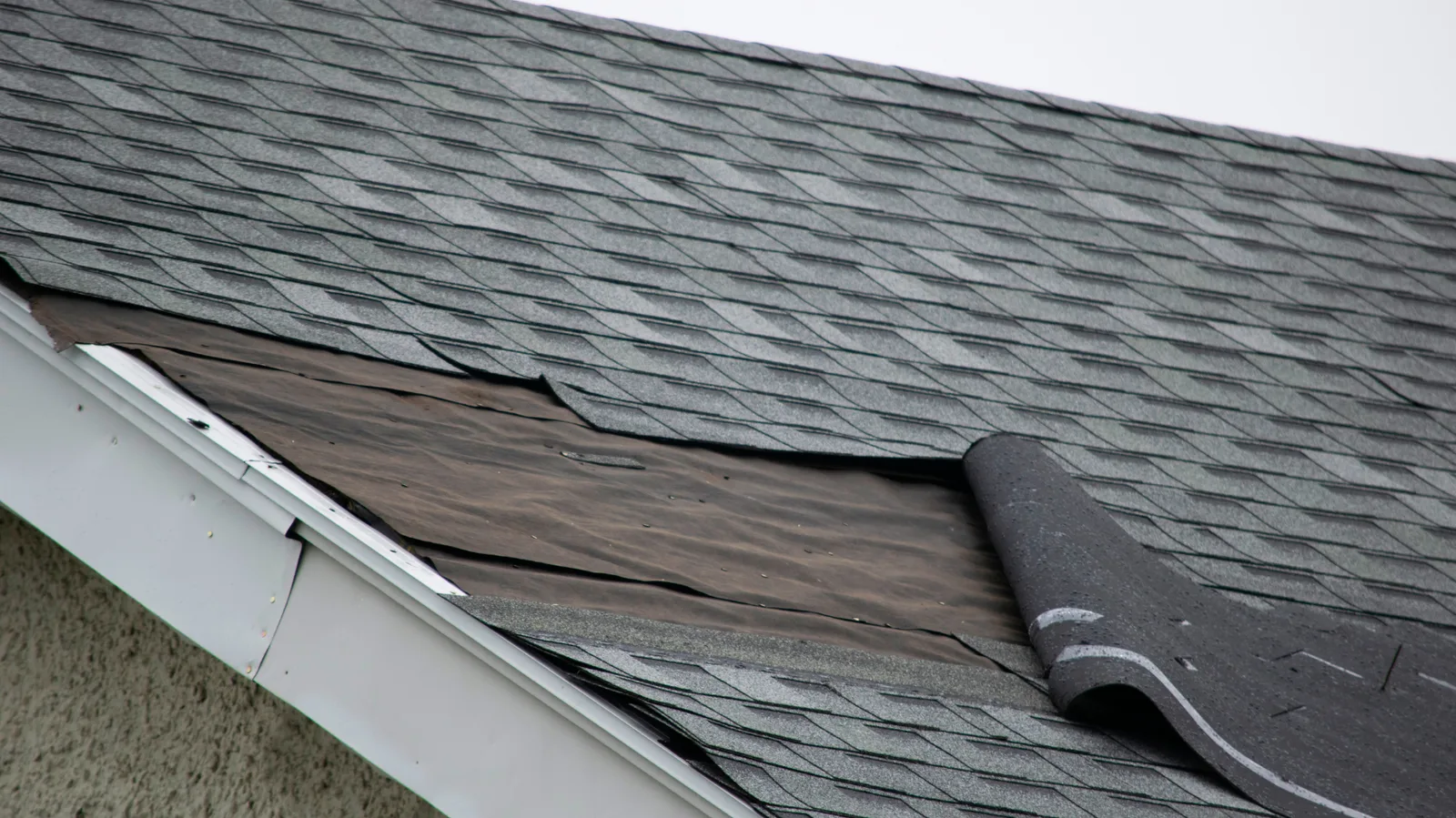
Why a roof leak can seem to disappear
The drip stops, the ceiling dries and the roof seems quiet again. That pause is useful relief, but it does not tell you whether the opening that admitted water has been repaired.
Dry weather hides the entry, not the opening
A roof leak needs both an entry and enough water reaching it. When rain stops, the visible symptom can stop too. Moisture left in the ceiling or insulation may take longer to dry, while the failed boot, flashing overlap or damaged covering remains outside.
That is why a dry week is not a reliable test of a repair that has not happened. Even the next rain may miss the opening if it is lighter or arrives from another direction. The useful question is how water entered and whether that path has been restored.
Wind and runoff change where water goes
Imagine runoff from a main roof collecting where it meets a lower porch. During heavier rain, more water reaches the transition. At a wall, wind can push rain against a joint that stays relatively dry in calmer weather. Around a pipe, a cracked collar can admit water without producing the same drip every time.
Water can then follow the deck or framing before it reaches the ceiling. The spot indoors may be away from the roof opening. Plumbing or condensation can also produce moisture near the same area, so the source should be established before another surface patch is added.
What the roof inspection helps resolve
A free roof inspection connects the symptom with the covering and details that could feed it. We examine the affected area and the condition of adjoining material, including whether a failed connection can be rebuilt as a focused repair. Hidden damage may only become clear when that defined area is opened.
You do not need to wait for another storm or climb onto the roof. Tell Riverport Roofing where the stain appeared and roughly when you first noticed it. If water is coming in now, say so when you call. Keep away from a sagging ceiling or water near electrical equipment.