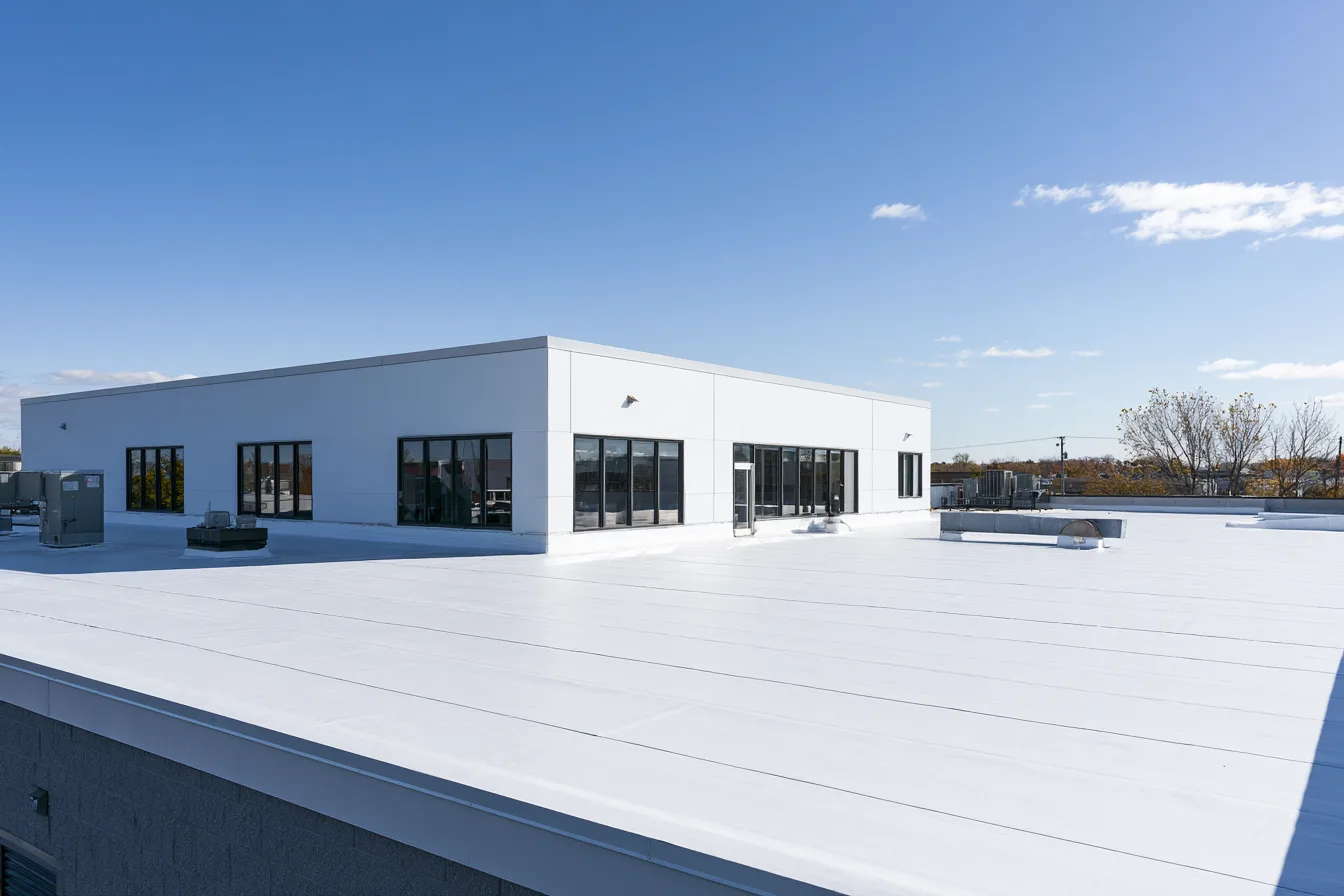
Flat roof repair in Van Buren, AR
A low-slope leak needs the right repair for the actual membrane and the layers below it. We follow seams, drains and equipment details to establish where the water enters and how far the work must extend.
Flat roof leaks need a system-specific repair
“Flat roof” describes a roof shape, not one repair method. TPO, PVC, EPDM, modified-bitumen and metal assemblies have different materials and connections. A patch that belongs on one can be incompatible with another.
The inside drip may also sit away from the entry. Water can travel across the deck or insulation before reaching the occupied space. We connect the reported leak with the roof’s drainage and details, while keeping plumbing and HVAC condensate in the assessment when they could be the source.
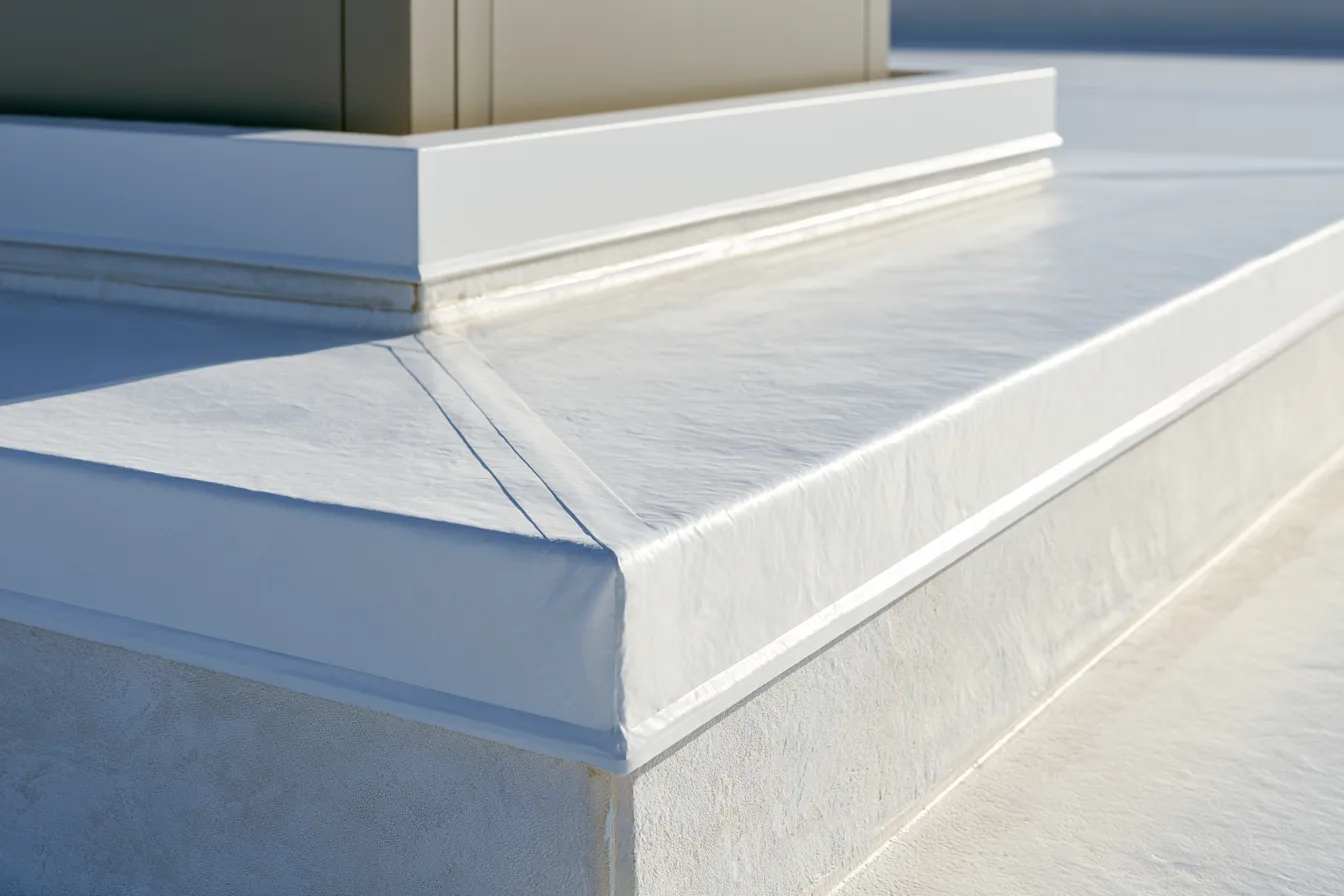
Repairing seams, drains and equipment curbs
- Seams and earlier repairs
Open laps, punctures and loose patches need a repair that reaches sound material. Thermoplastic seams use compatible heat-welded work; other systems use their own specified materials and methods. Contaminated or unstable older patches may need removal rather than another layer.
- Drains and scuppers
Clearing a blockage restores the outlet, while repairing the membrane-to-drain connection addresses leakage at the detail. Both can matter. Water that remains because of the roof geometry requires a separate drainage solution.
- Curbs, pipes and equipment
Corners, terminations and attachment around equipment can move or be disturbed during service. Flashing must remain connected to the field membrane. A condensate or plumbing leak needs that system repaired rather than repeated roof patches.
Surface defect or damage below the membrane
Keep future maintenance in the repair plan
A completed repair still needs accessible drains and care around rooftop equipment. Service traffic, new penetrations and debris can create later faults in a roof that was otherwise sound.
Keep the repair plan connected to how the building operates: entrances, stored goods, sensitive rooms and equipment access affect both the immediate work and future maintenance.
- Repeated leak locations
The history of where water appears helps distinguish a new opening from a recurring detail or drainage problem. Tell us what has already been repaired if you know.
- Future equipment work
A new curb, cable or pipe can disturb the roof system. Coordinating its flashing and attachment with the roofing detail helps preserve the repaired water path.
Flat roof repair in Van Buren FAQs
Why does a flat roof hold water?
Debris at an outlet, insufficient drainage or low areas in the roof assembly can all leave water behind. Clearing a drain does not reshape a low area, and a coating does not create slope. The cause determines the work.
Can a patch be made over an old patch?
Only if the materials and existing repair are suitable for a reliable connection. Loose, contaminated or incompatible material often needs removal so the new repair reaches a sound surface.
Can an HVAC leak look like a roof leak?
Yes. Condensate, equipment drains or plumbing can produce water near the same room or roof penetration. The source needs to be separated from rain entry before deciding on the repair.
Get help with a low-slope roof leak
Tell us which part of the building is affected and whether water is entering now. We can start with the roof and its drainage path.